
Cohort 52 is a platform for emerging voices from the Applied Art & Design program at Sierra College in Northern California. Cohort 52 is facilitated by Assistant Professor Vincent Pacheco.

Can you tell us a little bit about yourself?
I’m the kind of designer who loves the design of everything. I appreciate looking at the different design aspects of the world around me. I’ll notice websites, logos, advertisements, apps, movies, video games, books, and more. Things like symbolism or design aspects in media, or I’ll probably point out what font is being used too.
I am currently pursuing a career in web design. I enjoy making and designing something that people will appreciate and find useful. I love how web design is so organized, logical, and simple. I also love learning about the psychology of design and how subtle details like types of font, color, and spacing.
How much experience do you have with collage?
Collage artists tend to be picky when it comes to their source material. Can you talk about your approach for selecting your images and/or publications?
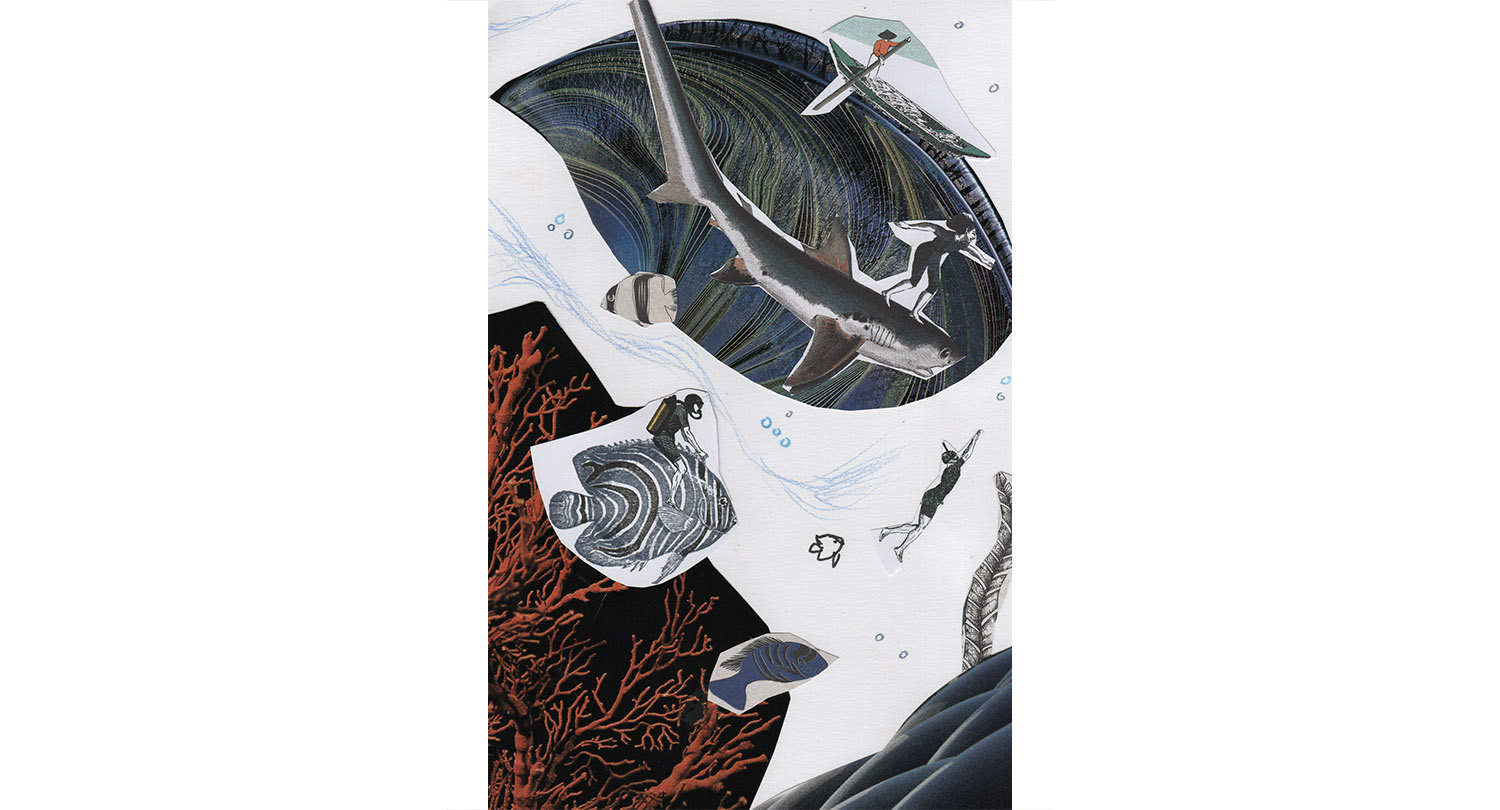
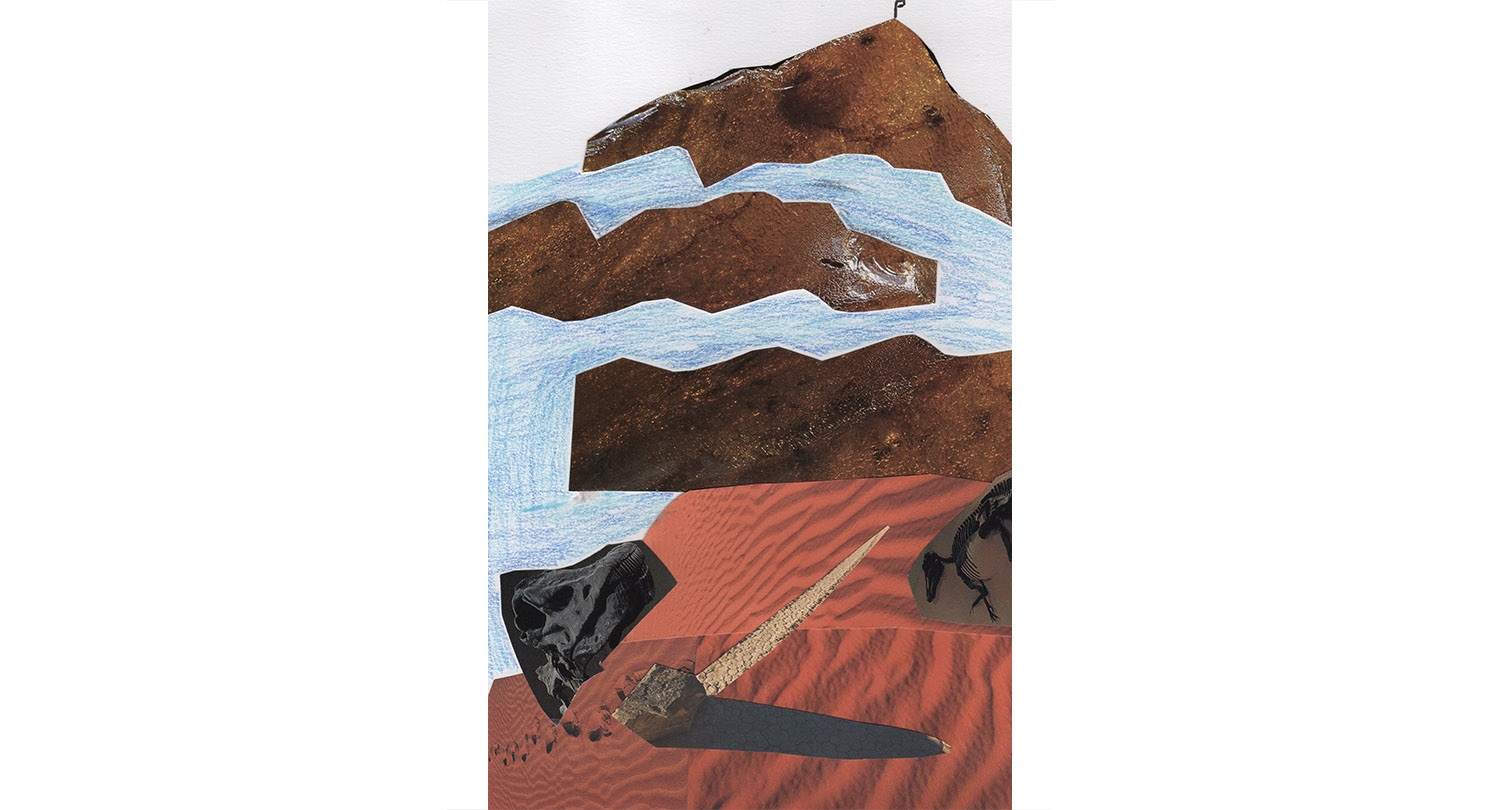
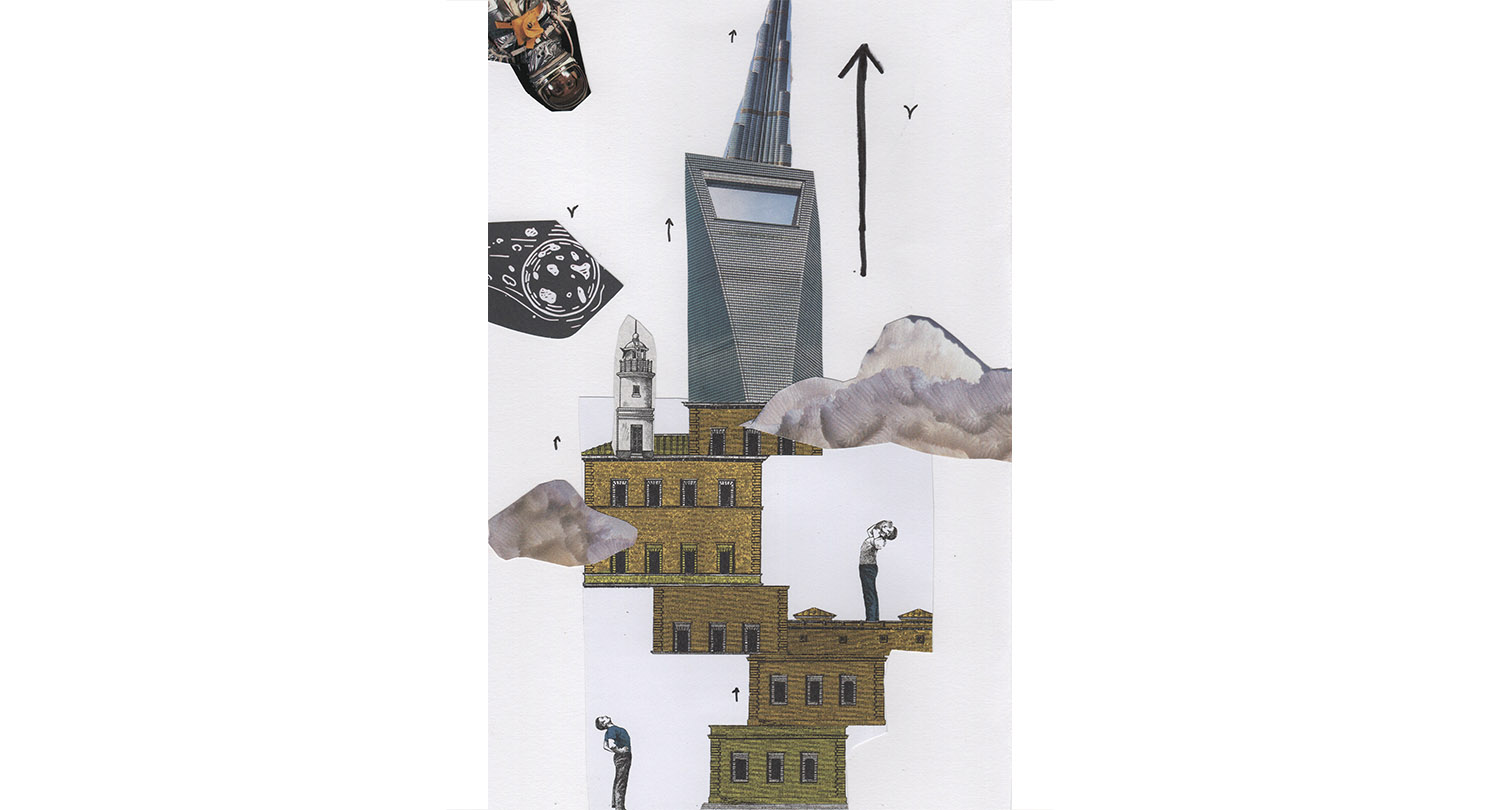
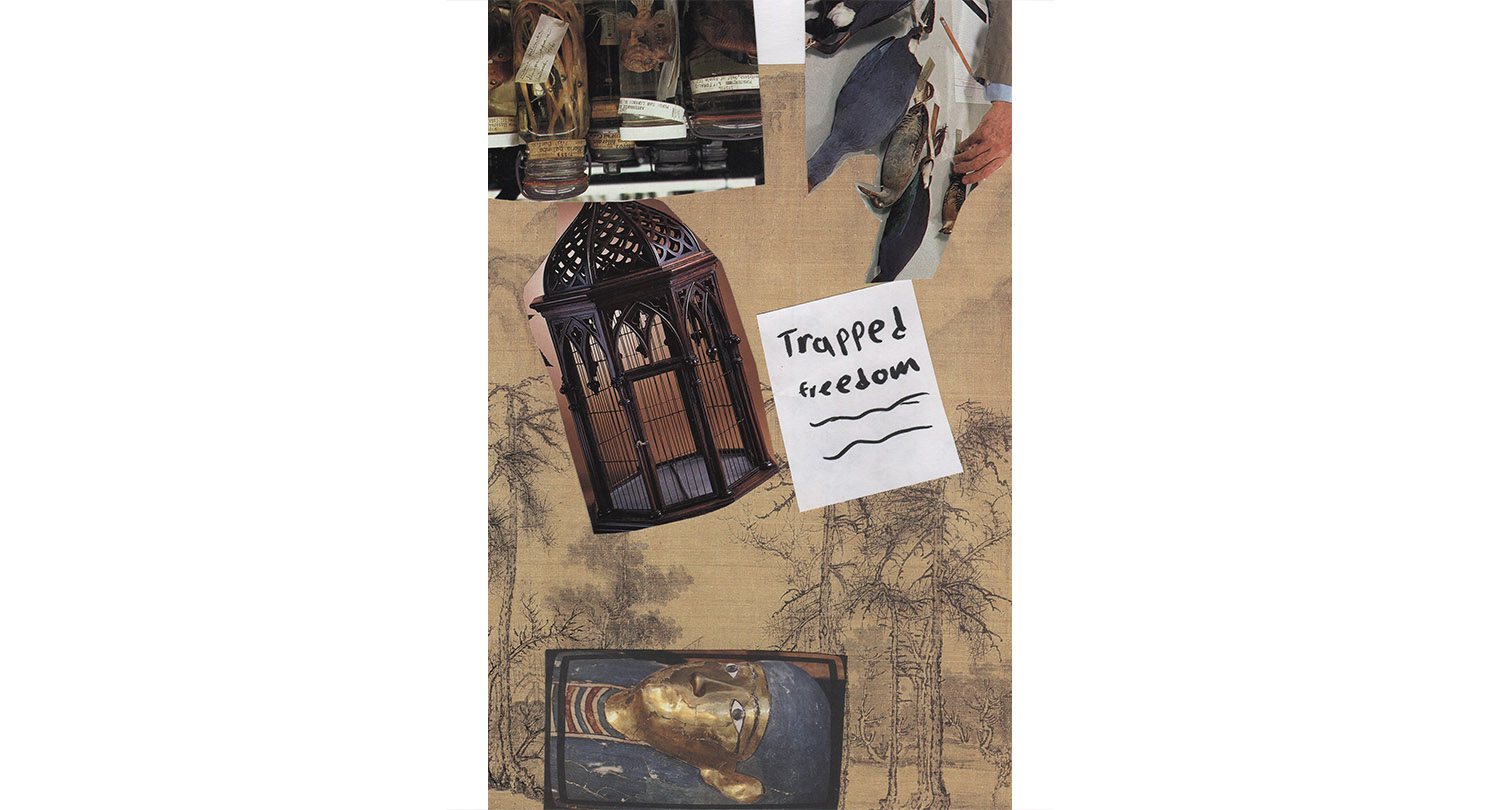
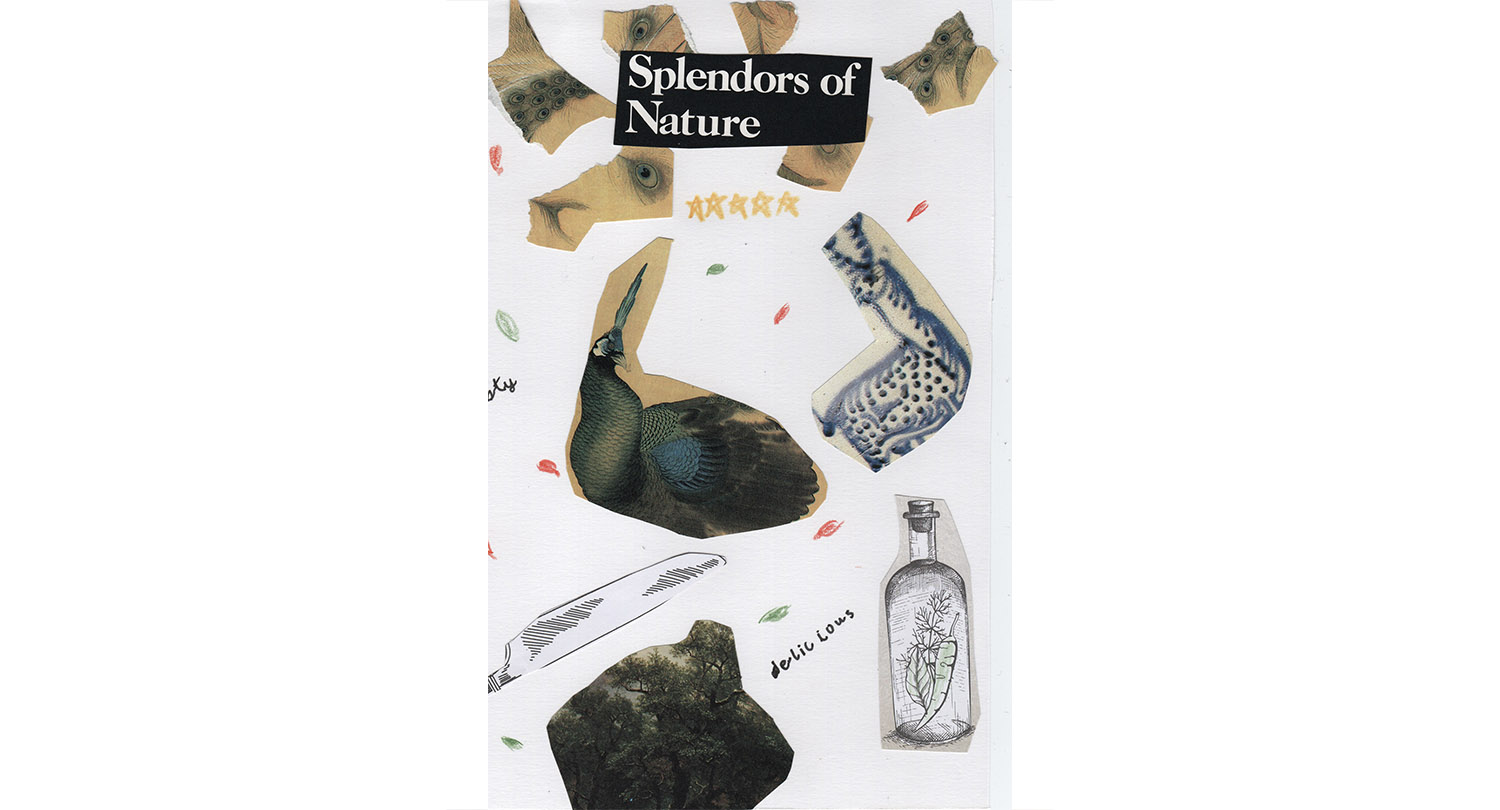
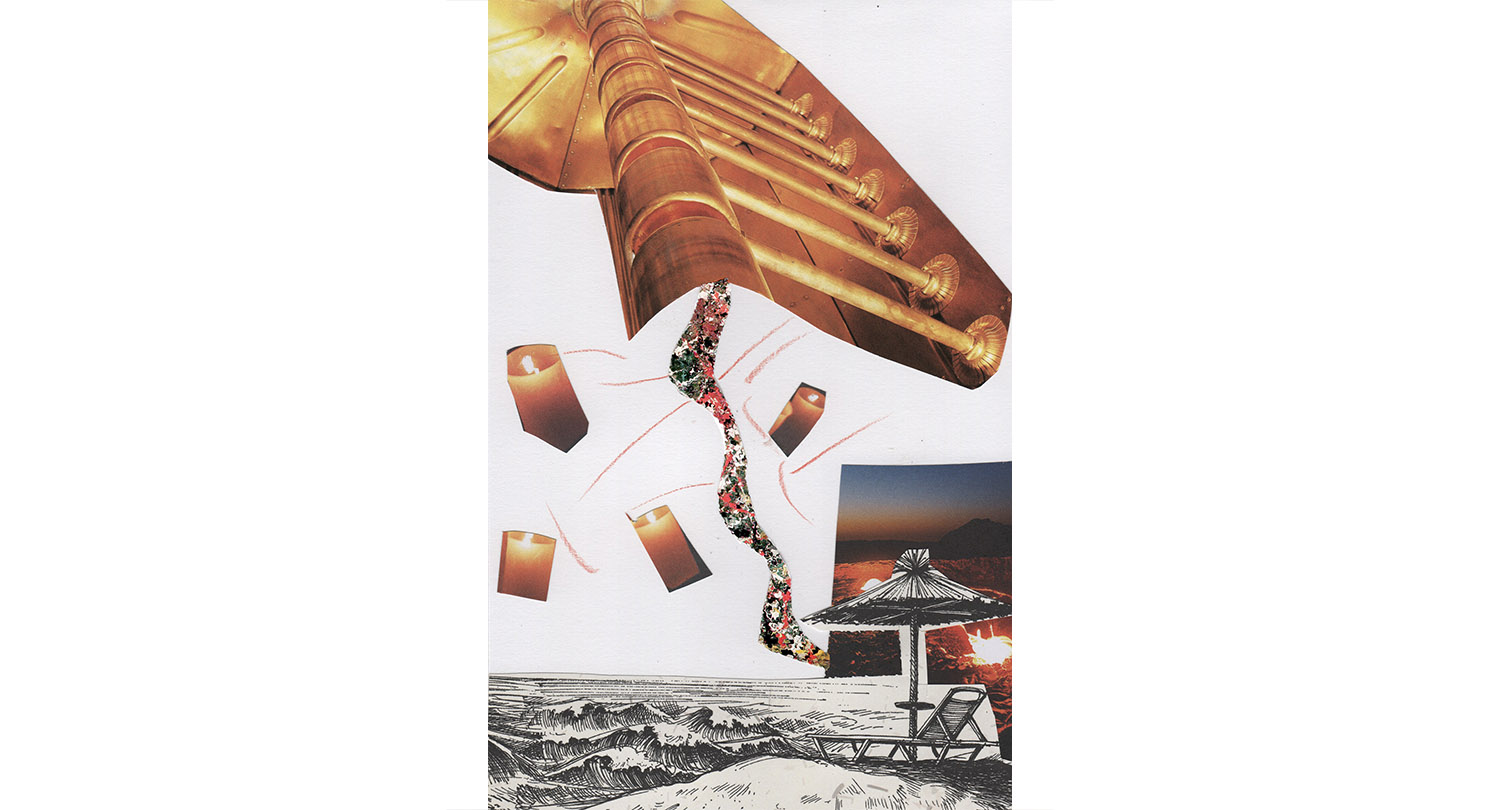
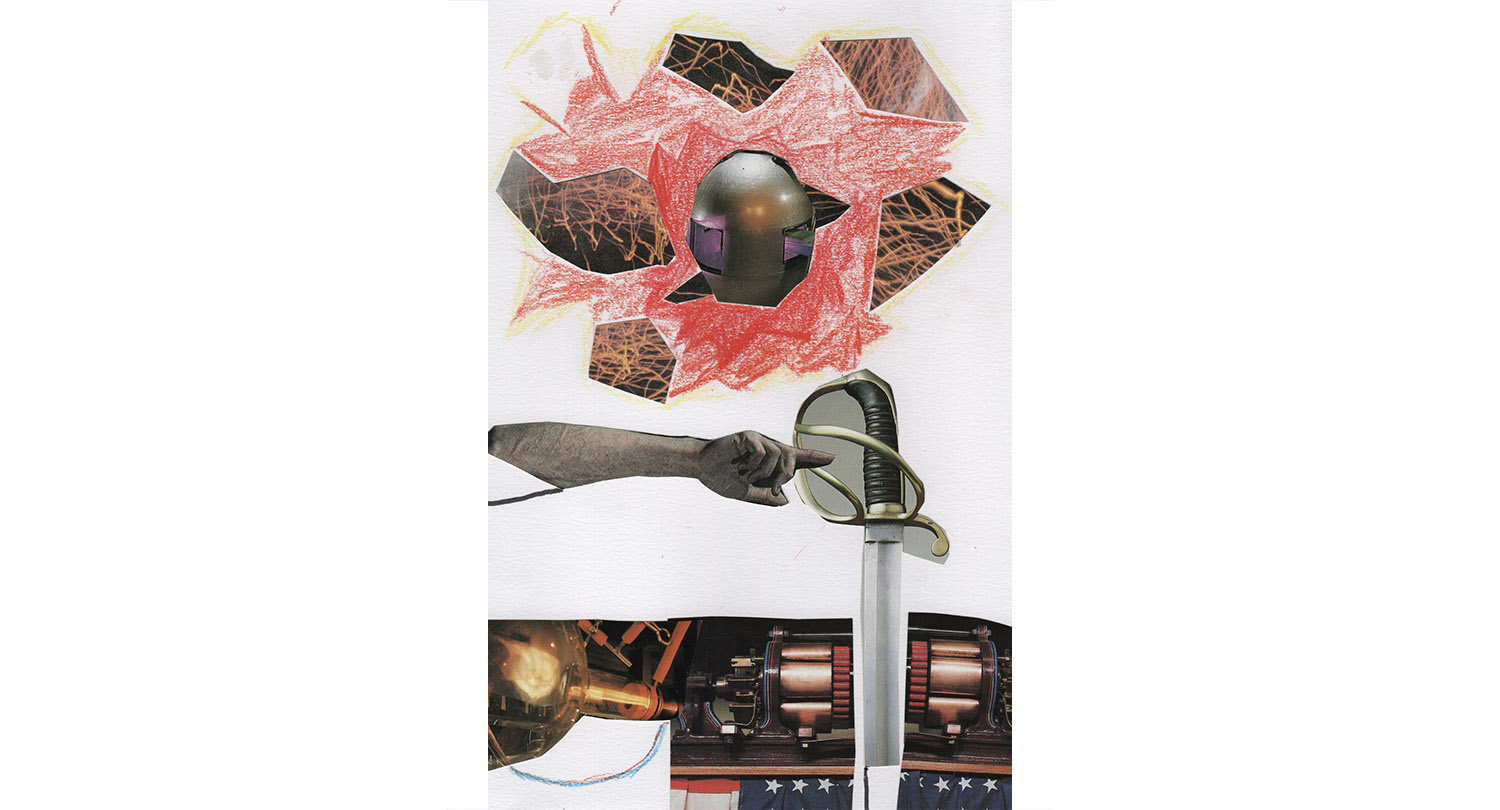
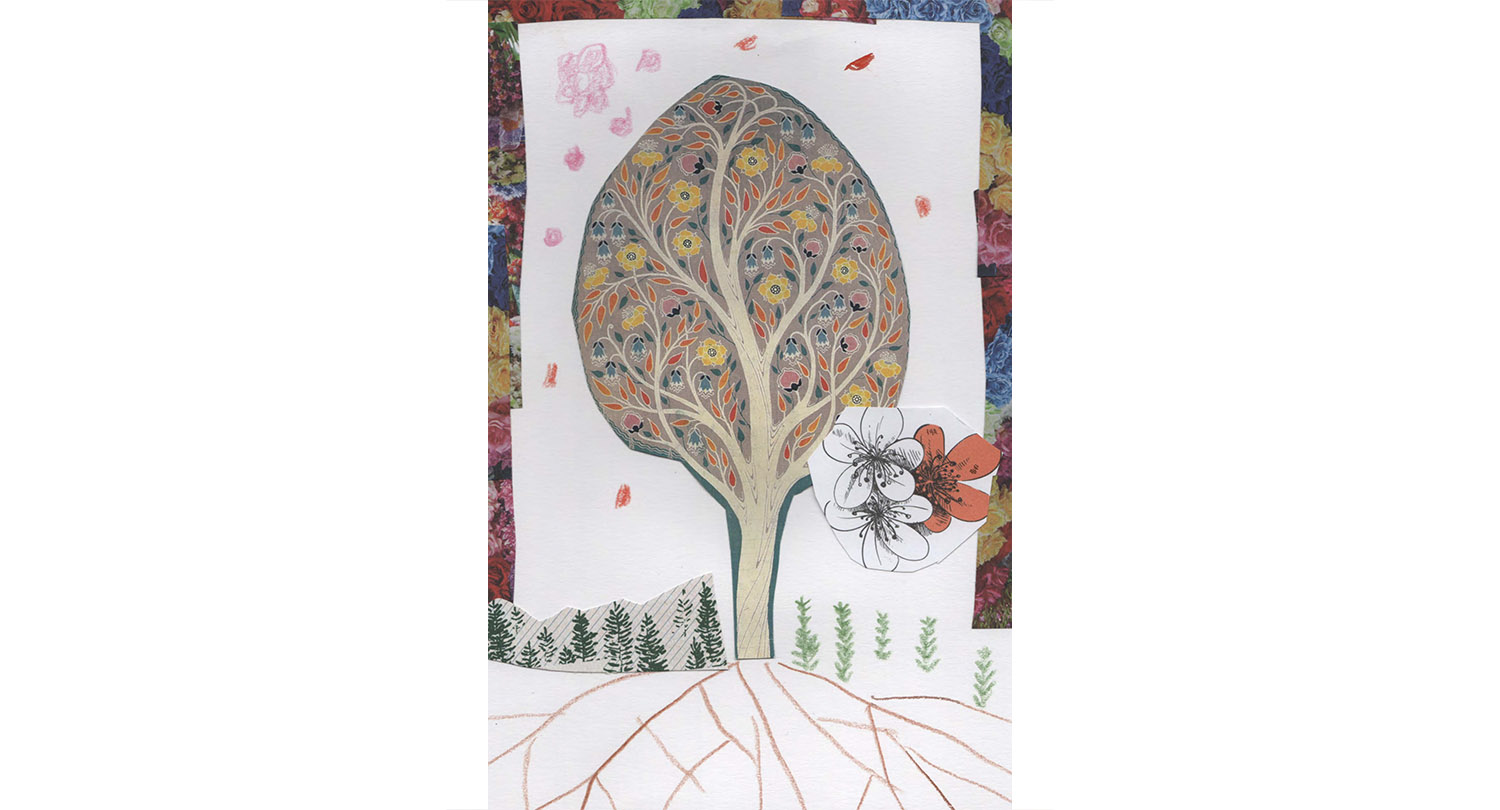
The sources I used were Treasures of the Smithsonian and a world travel book called Wanderlust. When approaching sources for my colleges, I had a thorough process before I could choose sources. I wanted a rough idea of the topics I would be tackling in my design, so I made a mind map to organize my thoughts. Once I narrowed down my thoughts, I looked for old books, encyclopedias, and textbooks that covered a variety of topics instead of finding books that specialized in a single topic.I wanted to cover as many different topics from as little sources to make my collages cover different ideas but are united by similar photography or art styles.
Were there any large themes you intended to explore or unpack before you began with this series of work? Did you stay on theme, or did things change as you began physically cutting and pasting images?
How did your background and life experiences inform your collages?
What was your environment and set-up like when making the work? Did you listen to music? Did you work in isolation, or were you surrounded by distraction? Do you think this influenced the work you made?
My work environment was in my room. It wasn’t just limited to my desk but my entire floor was separated into piles of papers, books, and cutouts for my collages. I often turned on music and spent some time alone just flipping through the thick books for images I found interesting. I occasionally brought in family members to explain my vision and ask for feedback, but I mostly worked alone. I feel this environment really shaped my work since I was trying to focus on how I perceived the world. By relying on my own mind maps and exploration of materials, I was able to create collages based on things I found interesting and then grouped them into topics afterwards.
Scissors or X-Acto?
I used both an X-Acto knife and scissors, but preferred the precise and sharp cuts of the X-Acto knife. I used the scissors to cut out larger portions of my source material in order to get a general idea of the patterns, colors, and designs of my pages. While this was great at larger cuts, the scissors struggled with precise cuts around my designs or straight lines.
Instead, I switched to the X-Acto knife, which was much better at cutting through one or more thick pages. With a straightedge, it could cut through several pages at once with clean lines. I could also create clean cuts by tracing objects more precisely rather than the scissors’ jagged or harsher cuts. While I preferred the precision of the X-Acto knife, both tools together helped trim down, and trace the images that I wanted to use for the collage.
Was there anything unexpected that emerged while creating your work? Any new epiphanies?
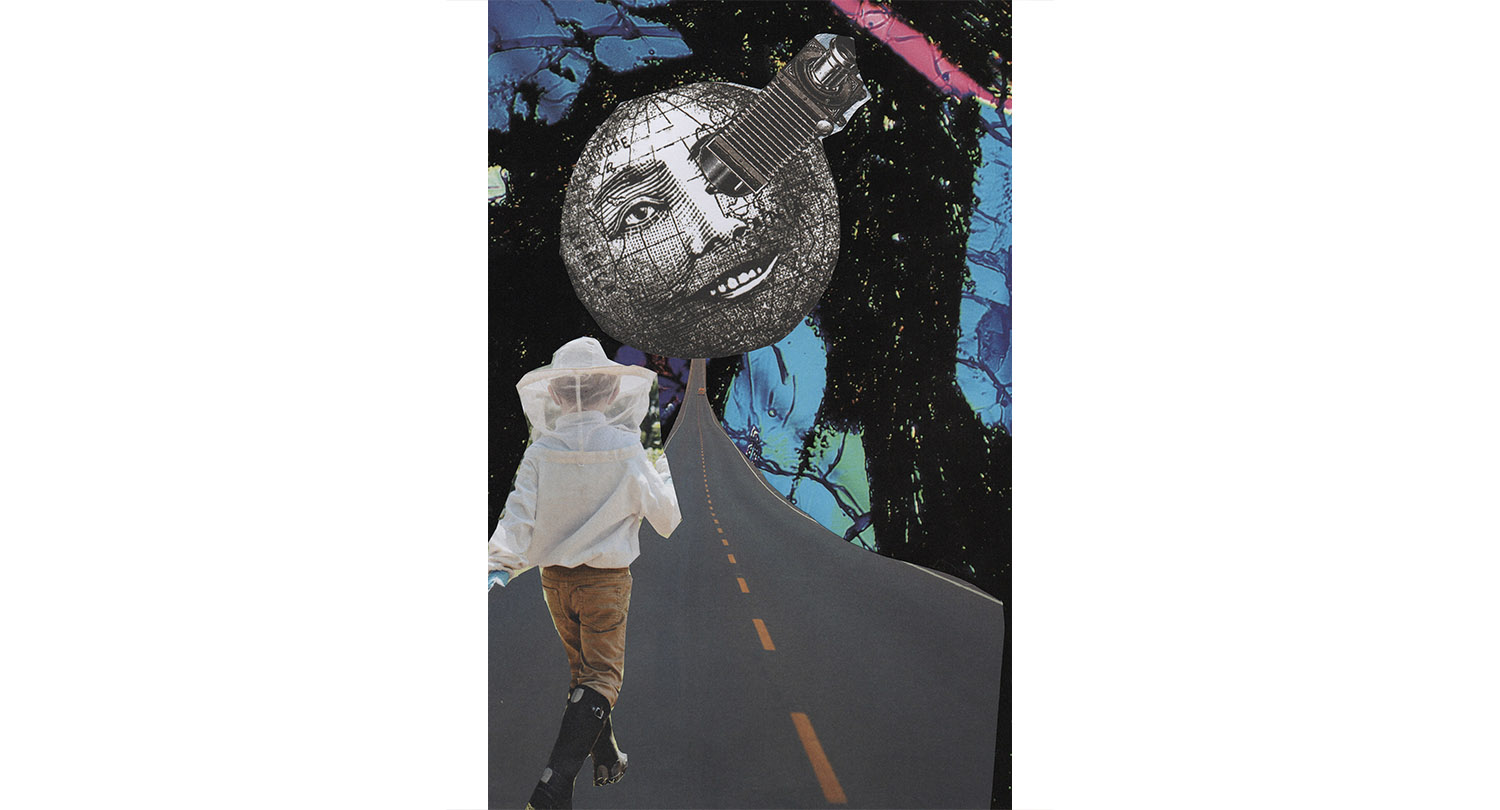
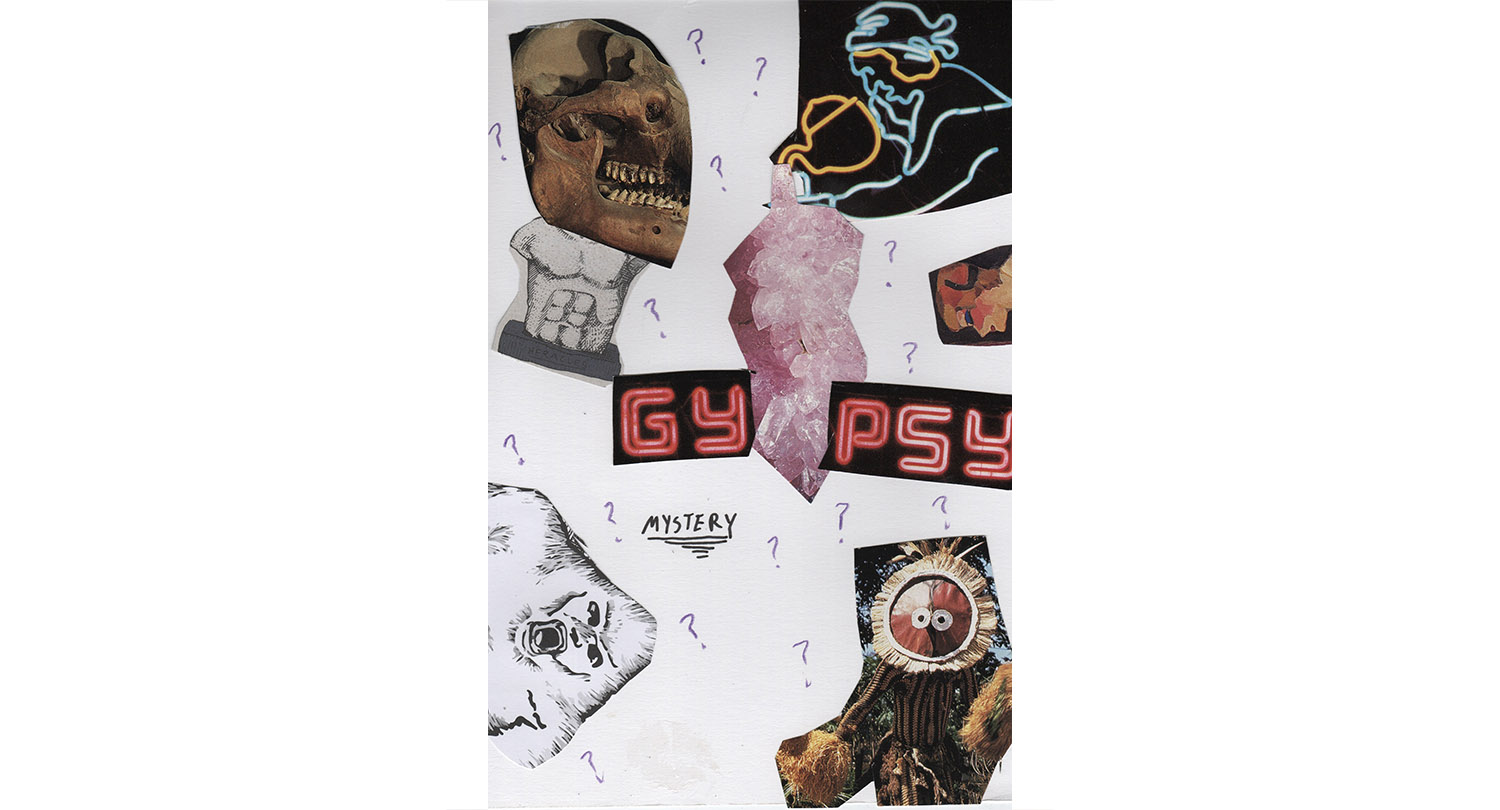
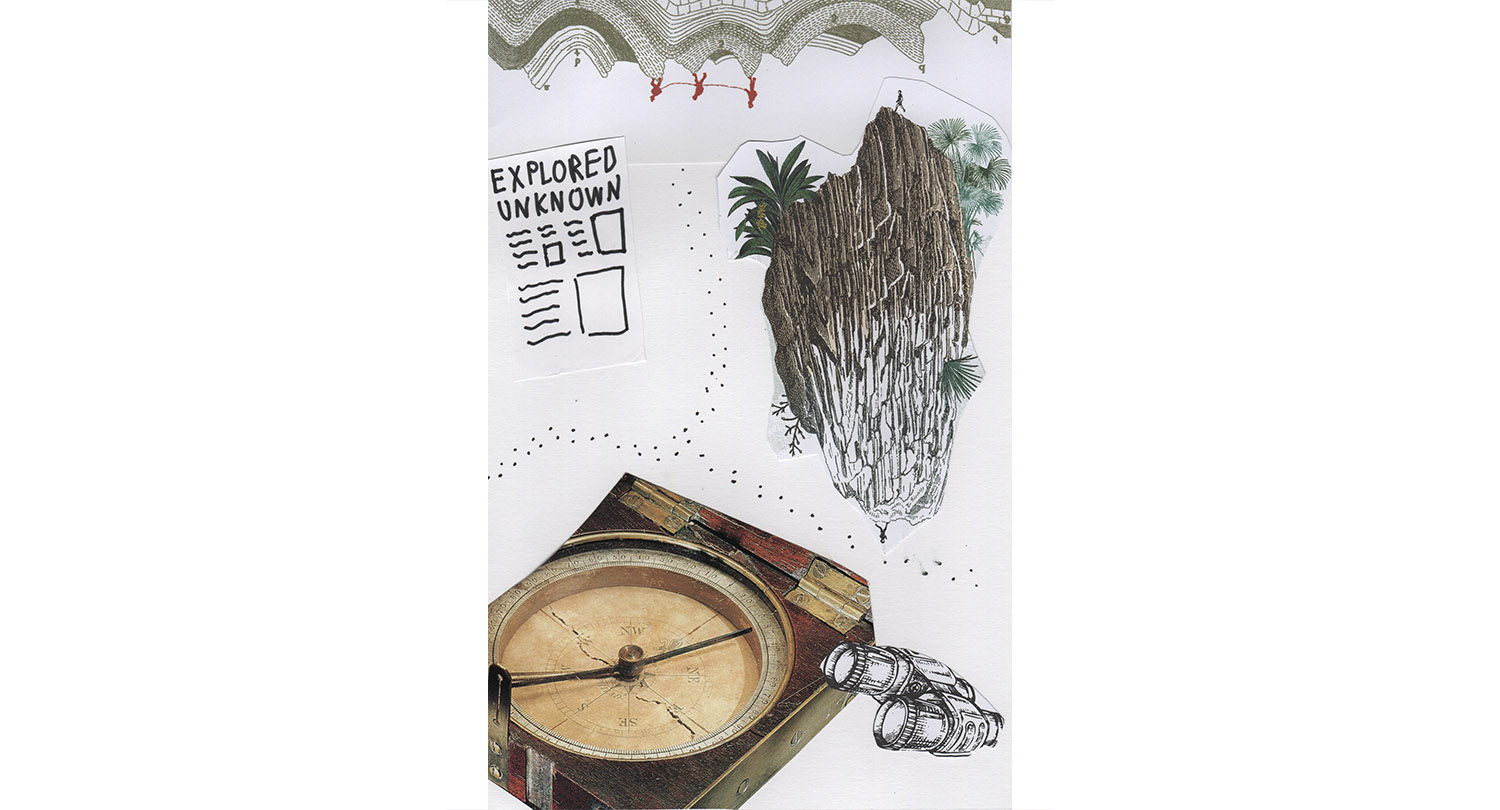
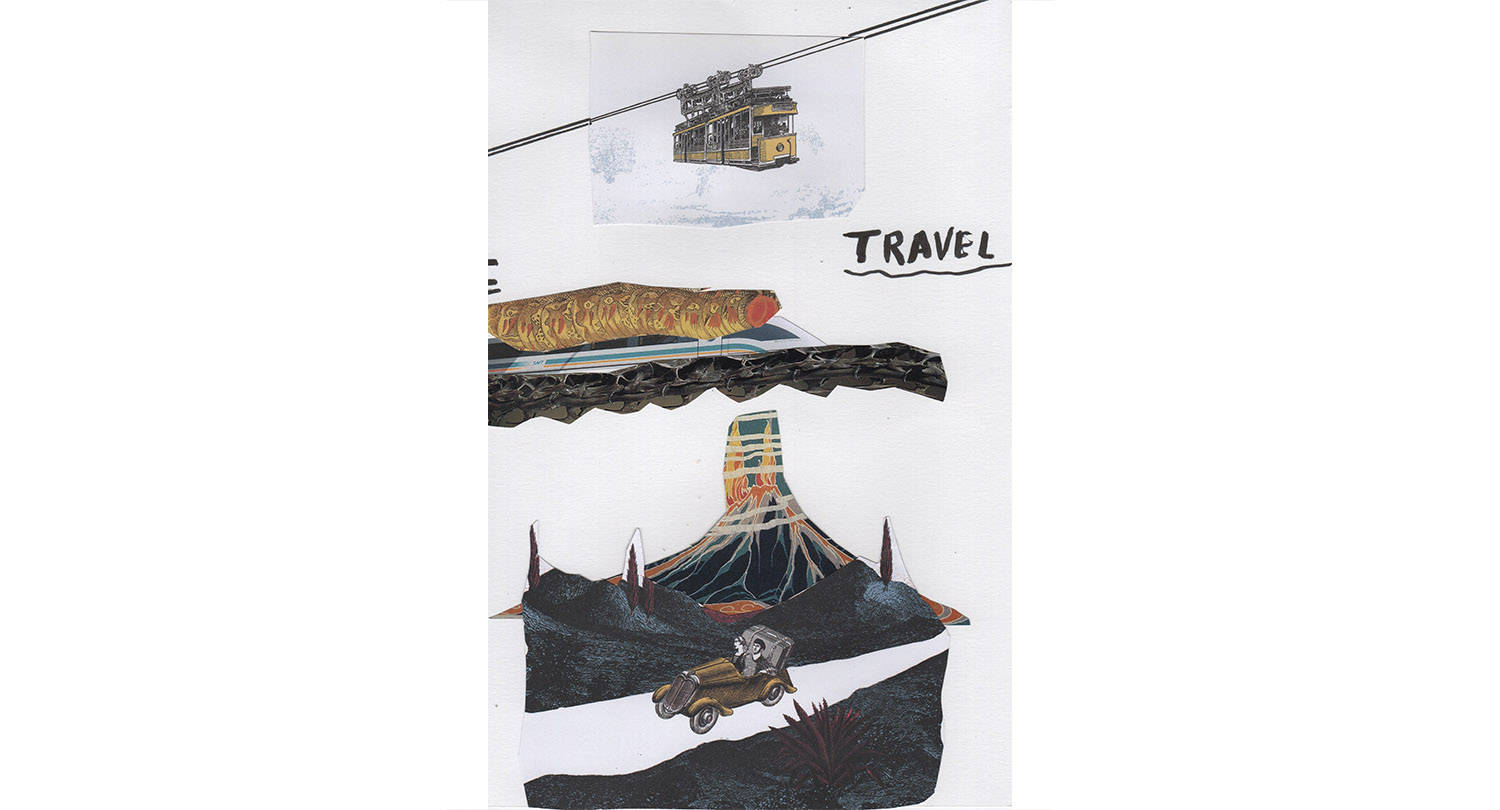
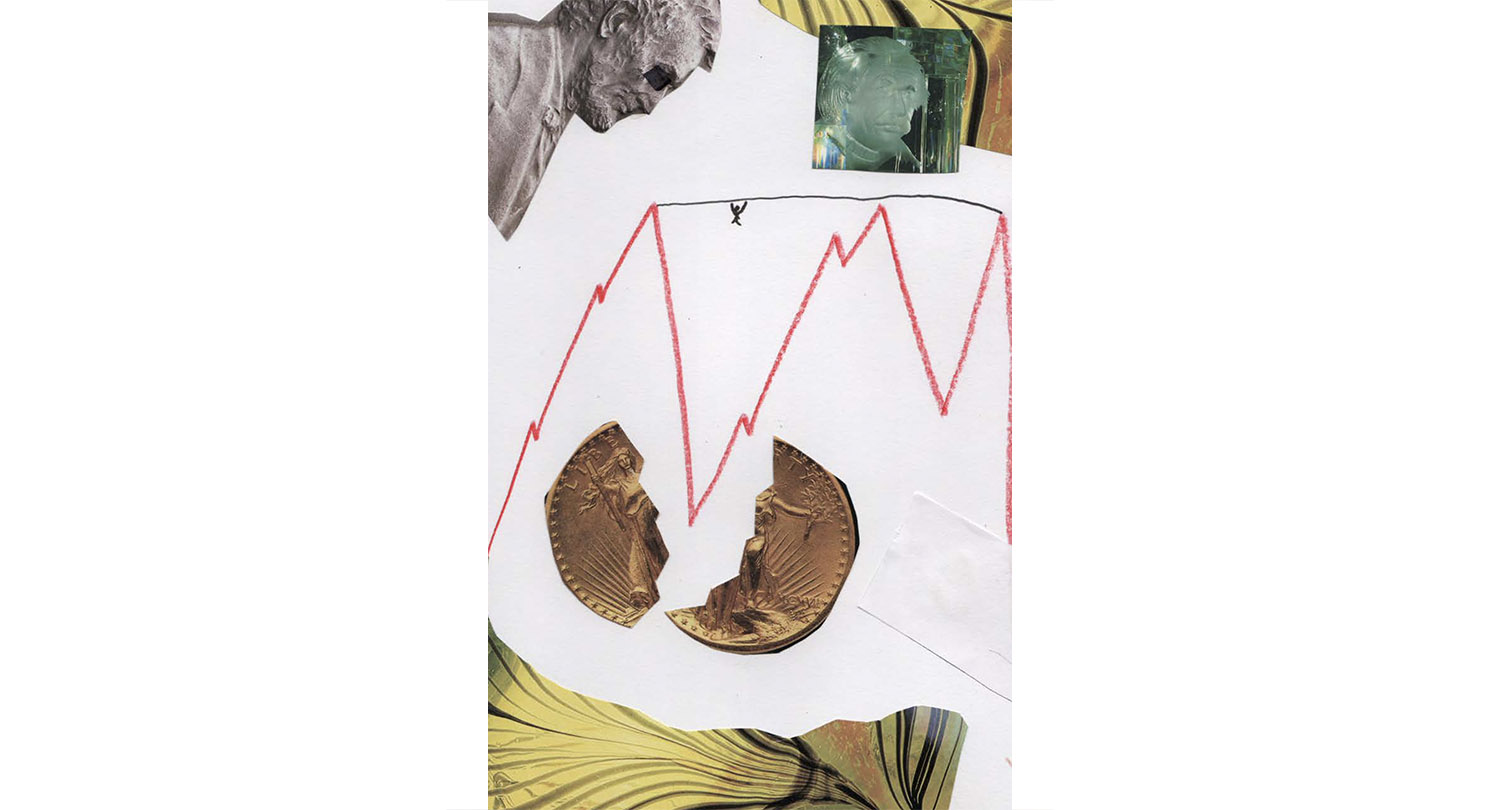
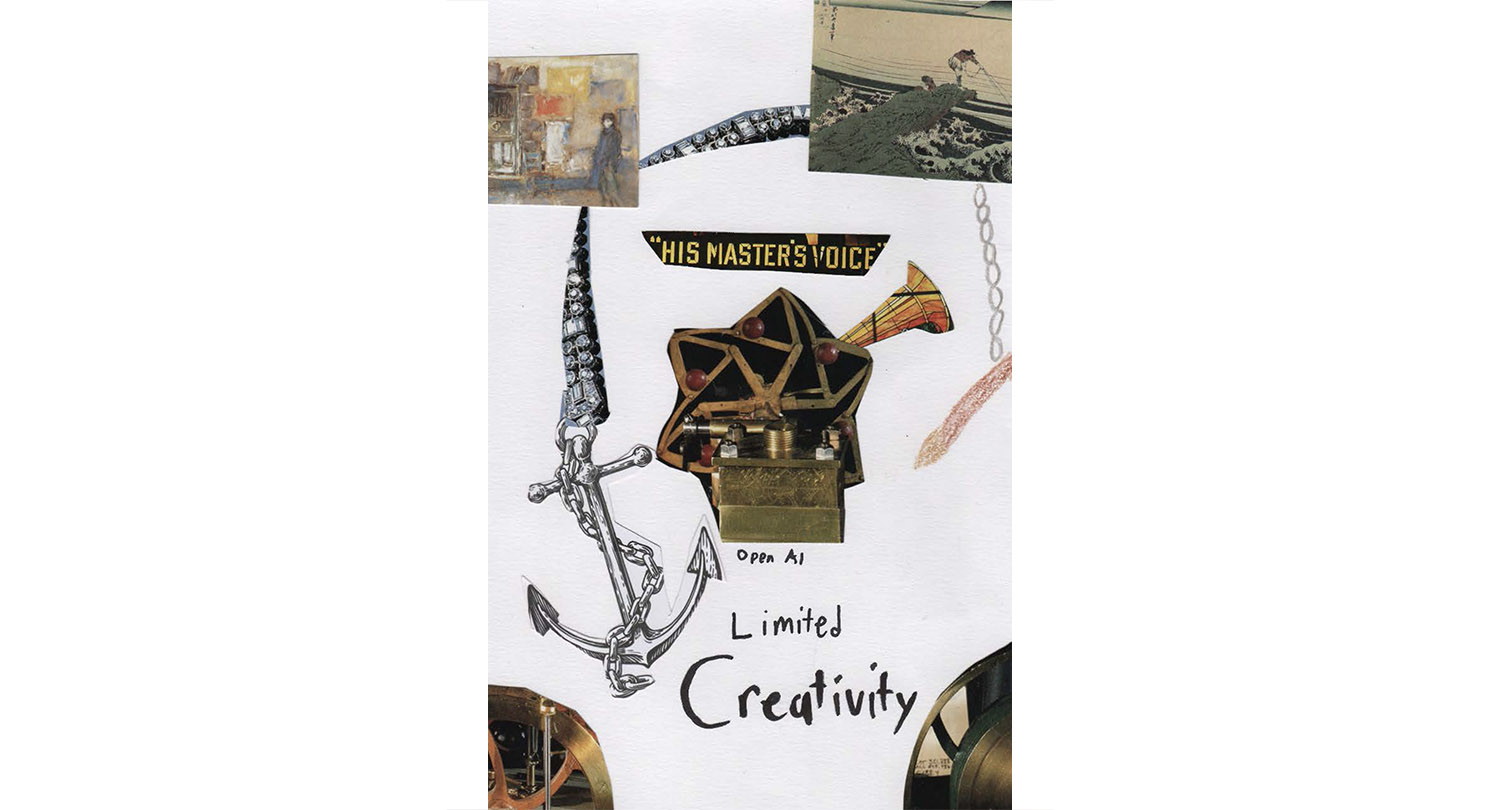
While I was creating my work, there were not many epiphanies. I mostly was trying to create controlled chaos in each collage, grouping seemingly random images to try and convey a concept or tell a story. My epiphany happened during our class discussion, where we realized that the order of my collages could be tweaked to become chronological rather than random. I was surprised since I chose more random topics, mostly relating to learning or human nature, so I was surprised each of these ideas could tell a story.
Looking at your work again, has your understanding of your collages changed over time? Has any hidden meaning emerged?
The meanings of most of my collages were changed and improved after changing the order of them. Initially, I wanted to embrace the randomness of the collages by making a random collection of concepts and ideas so the viewer would have to pick up the puzzle pieces of the topics on their own. Despite the unorganized nature of the collages, they would all be united by overarching topics of our society and world.
However, presenting my work at critiques helped me realize an underlying story. Many of my vague ideas of history, time, exploration, or conflict all could be repositioned to tell a story of our civilization. By telling the story in chronological order I presented a story of our growth, progress, and conflict with nature and each other.


